From Christian Prophet to Christian Profit, Part One: Maps of Meaning by Jordan B. Peterson

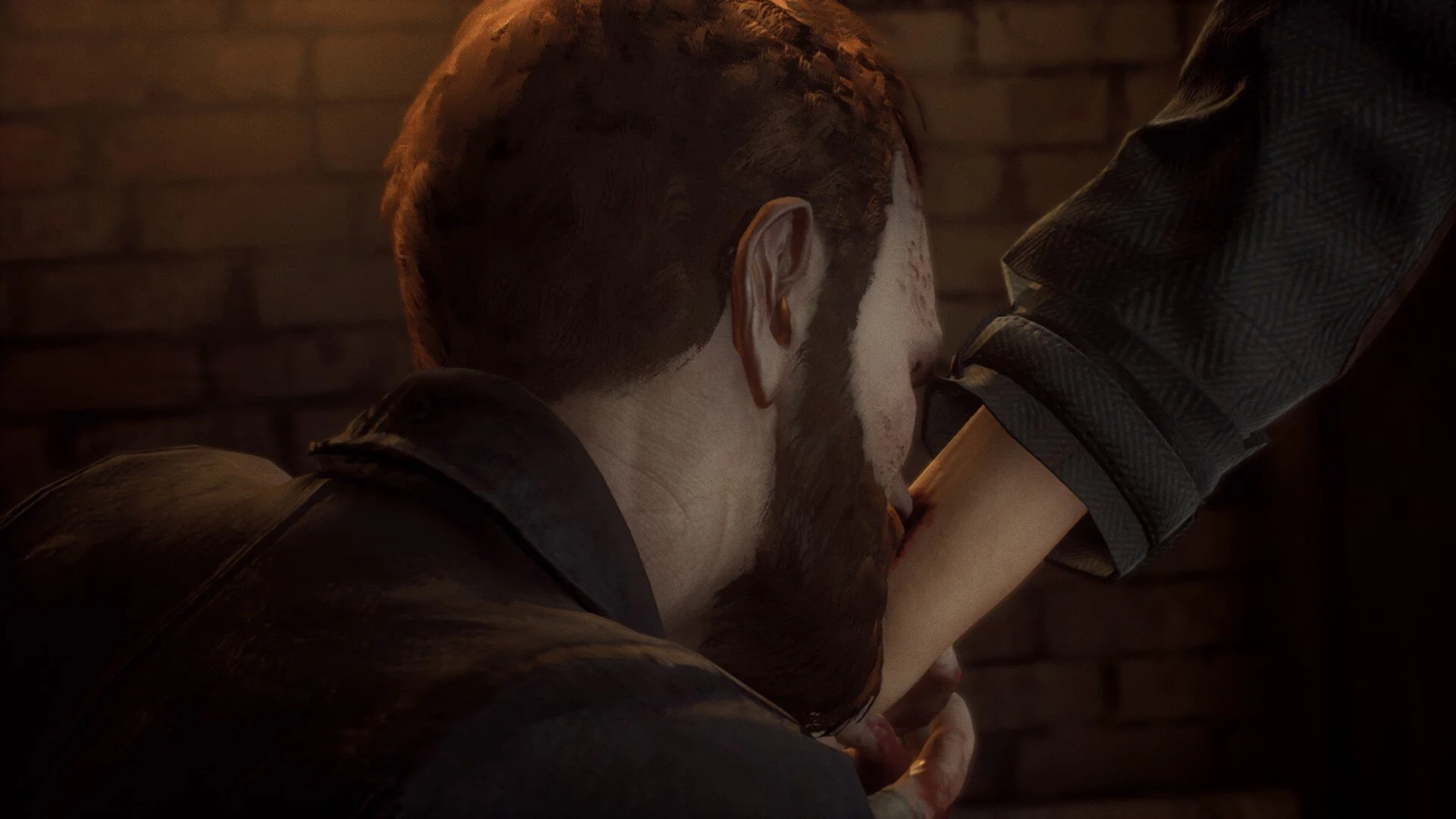
I was going to give his teeth a metallic sheen, but they’re even more terrifying untouched. The whole image is utterly horrific, in fact.

I was going to give his teeth a metallic sheen, but they’re even more terrifying untouched. The whole image is utterly horrific, in fact.

Tom Towers has previously talked about Jordan Peterson here.

Now that Tom has actually read not one but two books by Jordan Peterson, he has a few more things to say which are hopefully more interesting than the original piece. Peterson is an enigmatic figure, and his books do not disappoint: indeed, they reveal that to survive public scrutiny he has had to severely self-censor himself.

Seriously. He’s not on the BBC talking about how Western history is the only form of history in which the historians discuss (or believe they discuss) objective events; not that this makes non-Western historiography any less literally true as they still focus on the psychological significance of events, instead, apparently.

(To be fair, the psychological elements of “Eastern” (or rather, non-Abrahamic) theology and philosophy are much more complex than “Western” (or rather, Catholic and Norse) theology and philosophy—and it goes without saying that the reformation was something of a religious lobotomy for Christians (leaving them almost as dumb as the Vikings and Saxons).

Or better still, that it was dreaming of his grandmother’s paint-brush-like pubic hair that revealed to him how the feminine was symbolic of chaos. (Pe[e]pe[e] go into vejajay; though, luckily, he killed a bear in the dream instead of fucking his granny—but according to Freudian psychoanalysis, it’s fair to say that the axe was his stalk, and the bear his gramma’s cabbage!)

You can read about even more of Jordan Peterson’s wacky adventures here.

Tom Towers' Review of Art of Rally

20201016194436_1.jpg

Rally games are going through something of a renaissance right now, and Art of Rally is more than a worthy addition to the genre.

Simultaneously original and following through on the promise of a decade of ultimately disappointing Dirt (not to be confused with Dirt Rally) games, find out what makes Art of Rally so special by reading Tom’s review here.

Tom Towers Reviews Vampyr

Kiss the syringe.

Kiss the syringe.

Apparently it’s all about Oedipal sublimation and Brexit. Obviously to reach such conclusions Tom’s review contains major spoilers, so read it at your own risk here.

Not mentioned in the review, but the voice acting and direction is phenomenal. Anthony Howell and Katherine Kingsley manage to make a rather awkward romance somewhat effective, and the whole cast manage to chew through the good and the bad of Dontnod dialogue equally well, which is a big improvement on Life is Strange!

Happy Birthday Sky!

IMG_0521.JPG

To celebrate the one-year anniversary of Sky, I wrote a few words about the universal language of memes and how a shared sense of humour has helped to foster a truly cosmopolitan internet community. What does this have to do with Sky? Well, the effort required to communicate with other players encourages a more amicable atmosphere than social media or most other games.

You can read it here. But try not to take all the generalisations too seriously. Remember, this is an Australian site, after all!

Microsoft Flight Sim

Microsoft’s Flight Simulator has always been a series of games that I aspired to play but never got around to. When I did buy a copy of Flight Simulator X, in 2006 (the most last full version released, my computer did not have the chops to play it.

Now, 14 years later, with just a small side game released in between, Microsoft is bringing back the series in just a few days as a PC exclusive. Interesting it was developed by Asobo Studios which made A Plague Tale: Innocence which Tom reviewed in episode 126. Given their prior games they are not exactly the studio you would expect to handle one of the crown jewel’s of Microsoft’s library.

Judging from the trailer above, which is an interesting retrospective of the series, Asobo has done well, though we’ll soon find out if they can measure up to the high expectations from followers of the franchise.

Phil Fogg

SimCity of Dreams

Recently I did not have access to the internet, so I was compelled to look at images that I had compiled for myself, rather than those that internet saturates me with. What I found was disturbing. For the most part, because of what it revealed about myself, in that, in over twenty-plus years, my neurosis has changed not at all. Observe for yourselves, a dot matrix printed image from the 386 PC version of the original SimCity.

image-1.jpg


I recall now that I had printed out my progress of a city so that I could review it the next day at work and make plans of what hoped to bring to life that night. Of course, I never spent so much time on my actual future, or the people around me, but damn, I had the city of Pinion in my hands.

image.jpg

The name was certainly a subconscious choice, Pinion meaning to immobilize a person by pinning back their extremities, while also being the definition of a part of the wing that gives flight. At the time I likely thought it as a conjunction of a state of stability linked with that of being a citizen/ denizen, a name without cognitive dissonance, or what used to be called irony.

You can see that I was planning a "NPS" (New Power Station) and various roadways when I could afford them, fortunately for the future Sims (yes, even back then they were called Sims) the nuclear powers station in what would become the 'burbs” was not to be. At some point I arrived at Pinion one hundred years later and low and behold, things pretty much panned out as planned (though those NPS were placed more reasonably further out of town). Also, I've gotten rid of a phallic island and infringed on a poor internal waterway. These images, my first time seeing them in at least a two decades, raised some introspection. First that of sadness, a simple emotion and so easy to cut straight to. But then, ruefulness, a contextual sadness. But then something more, resentment, one which carries over to my un-simulated world, an embarrassment of naivety. A naivety that believed, without reflection, that the future can be planned and that the current inhibitors and restrictions are not necessarily defied, but unknown.

-Phil Fogg