Papers, Please
"Glory to the Stamp"
2013 PC, Mac, Linux, iOS and PlayStation Vita
Every few years someone asks me what my favourite game is, and every few years I give the same answer. Papers, Please was my game of the year in 2013, and when I sat down to pick my personal top ten games of the 2010s, whittling sixty games down to twenty, then fourteen, then ten, it was the easiest call on the list. Number one. Above Deadly Premonition, above Jazzpunk, above everything. When Tom and I put together our joint list of the decade's most important games, it didn't make the cut, which tells you that list was about importance, and this one is about love.
I'll be honest about my bias. When I play a big-budget AAA game, I'm never surprised. I enjoy them; they're impeccably produced, but my expectations are baked in before I press start. The games I truly remember are the ones that stay with me, and no game has stayed with me like this one.
The premise sounds like a punchline. It's 1982, and you've won the October labour lottery in the communist state of Arstotzka. Your prize is a job as an immigration inspector at the Grestin border checkpoint. A person steps up to your window, slides their papers across, and you decide whether they get in. Your job is to make sure nobody enters your country fraudulently. You are the sole arbiter, but you are also being watched, and every mistake is noted.
Each day the rules change. First it's just passports: check the photo, check the issuing city, check the date. Then come entry permits, work passes, ID supplements, vaccination certificates and body scans. The rulebook grows thicker, the queue grows longer, and you're paid per person processed. Get it wrong, and you're docked. Get it slow, and your family goes without heat, food or medicine.
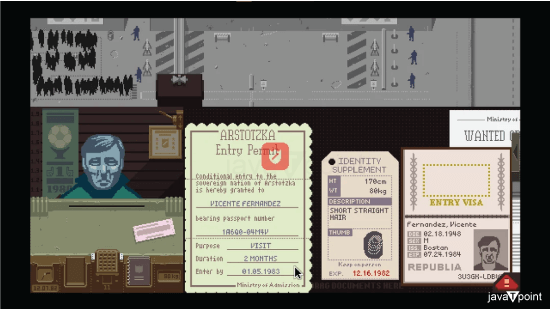
The amount of documents to cross check increases, but not at a pace that puts you off.
What makes it work is how tactile it is. You drag documents across a cramped desk, line them up, and hunt for discrepancies. And then there's the stamp. That ka-chunk of APPROVED or DENIED is one of the most satisfying sounds in video games. You feel the decision in your hand. I've played other desk-based games since, and the ones that miss the stamp miss the point.
The genius is in what the game does to you. At first, I'll admit, I enjoyed the power. Denying someone who challenged my authority felt good. I fell straight into the role of the compliant worker: new rule today? Fine, it's my job. Then the plot starts to turn. A woman begs you to let her through to be with her husband, her papers one stamp short. A mysterious order starts slipping notes into your booth. Suddenly, doing your job well and doing the right thing are two different things, and balancing your performance against your conscience becomes overwhelming. The stress of getting the job right carries most of the game, but subverting it becomes the far greater moral and emotional strain. What starts as a simple rubber-stamping job turns into a stress test that only intensifies until the very end.
Here's the part that still blows my mind. Lucas Pope made this game on his own. One person. Others contributed to the music, but the design, the art, the writing and the code are his. I've played games from studios of eight with half the finesse, and blockbusters with credit rolls as long as a Call of Duty campaign with a fraction of its heart.
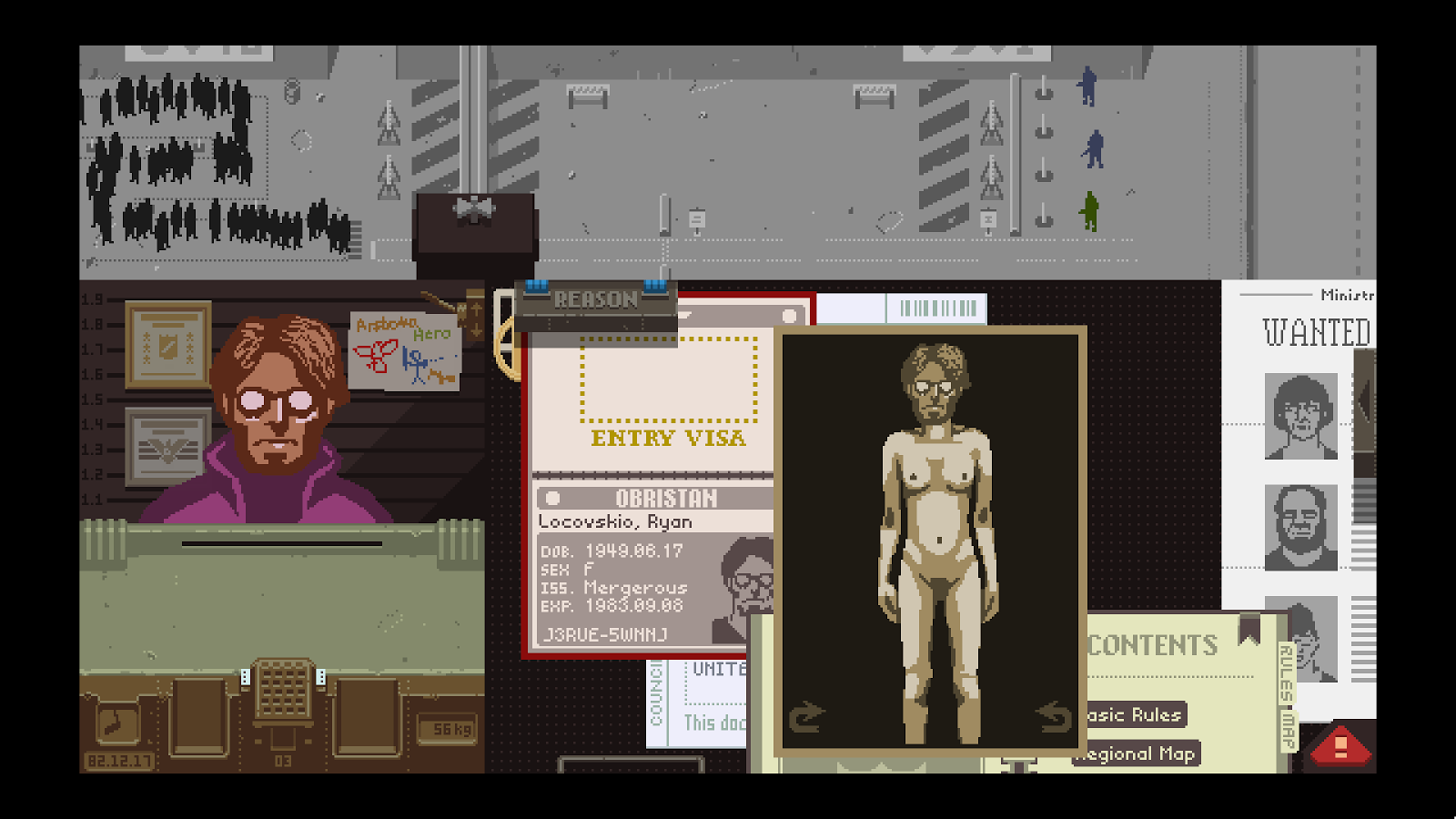
Hrmm. Can you see the issue here?
It wasn't born in a vacuum. Years later I played Wall Street Kid on the NES, and there it was: a desk, a newspaper telling you how the world is moving, and a clock you click to end the day. A prototype of Papers, Please nearly twenty-five years early, minus the political satire. But Pope took that skeleton and gave it a conscience, and in doing so created a genre. When people describe a game as a "job simulator" today, it's this game they're measuring it against, whether they know it or not.
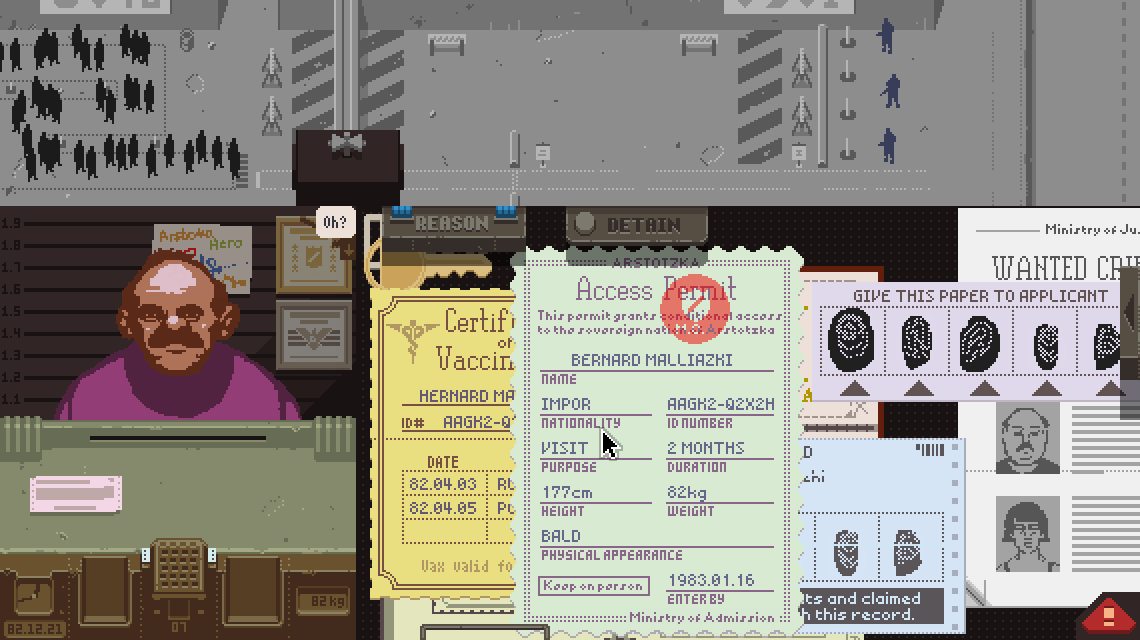
Organising documents on your desk is part of the game. I do suggest mouse controls are best.
If I have one complaint, it's a business one, not a creative one. This would have been a perfect DS, 3DS or Wii U game, dragging papers around a second screen with a stylus. That's money left on the table. Still, you can play it on just about everything else now, including your phone.
Back on the podcast in 2013, I gave Papers, Please an 11 out of 10. My co-host gave it a 7, which tells you everything you need to know about my co-host. Our scale only goes to 10, so in the interests of journalistic integrity I'm bringing it back into line. It doesn't change a thing. Papers, Please is a masterpiece and the best game of the 2010s. If you haven't played it, play it. If you have, play it again. And if you don't like Papers, Please, why are you reading this website?
Phil Fogg