Indika
“Eat Your Meal in Courses”
2024 PC, PlayStation 5 and Xbox Series X|S Played on PC with XB controller for review.
There is a moment early in Indika where a nun is sent to fetch water from a well. Then she fetches it again. Then again. By the third trip you get it: this is a work simulator, and the work is meant to be meaningless. Where Valve’s recent Aperture Desk Job uses the same trick and wears it out by the tenth repetition, Indika knows exactly when to stop. That is a game that understands its own theme, and it’s the first sign that Odd Meter, publishing its debut through 11 bit studios (the people who brought us This War of Mine), has made something unusual.
Indika is a third-person puzzle platformer, with walking simulator stretches and a handful of 2D retro interludes, built in Unreal Engine. The internet has filed it under “adventure”, which tells you nothing. What grabbed me first was the art direction: nuns with Renaissance-style golden halos painted flat behind their heads, crowding and mocking a woman who is modest in appearance but beautiful by comparison. It is brutal, confronting, and you immediately want to know what’s going on.
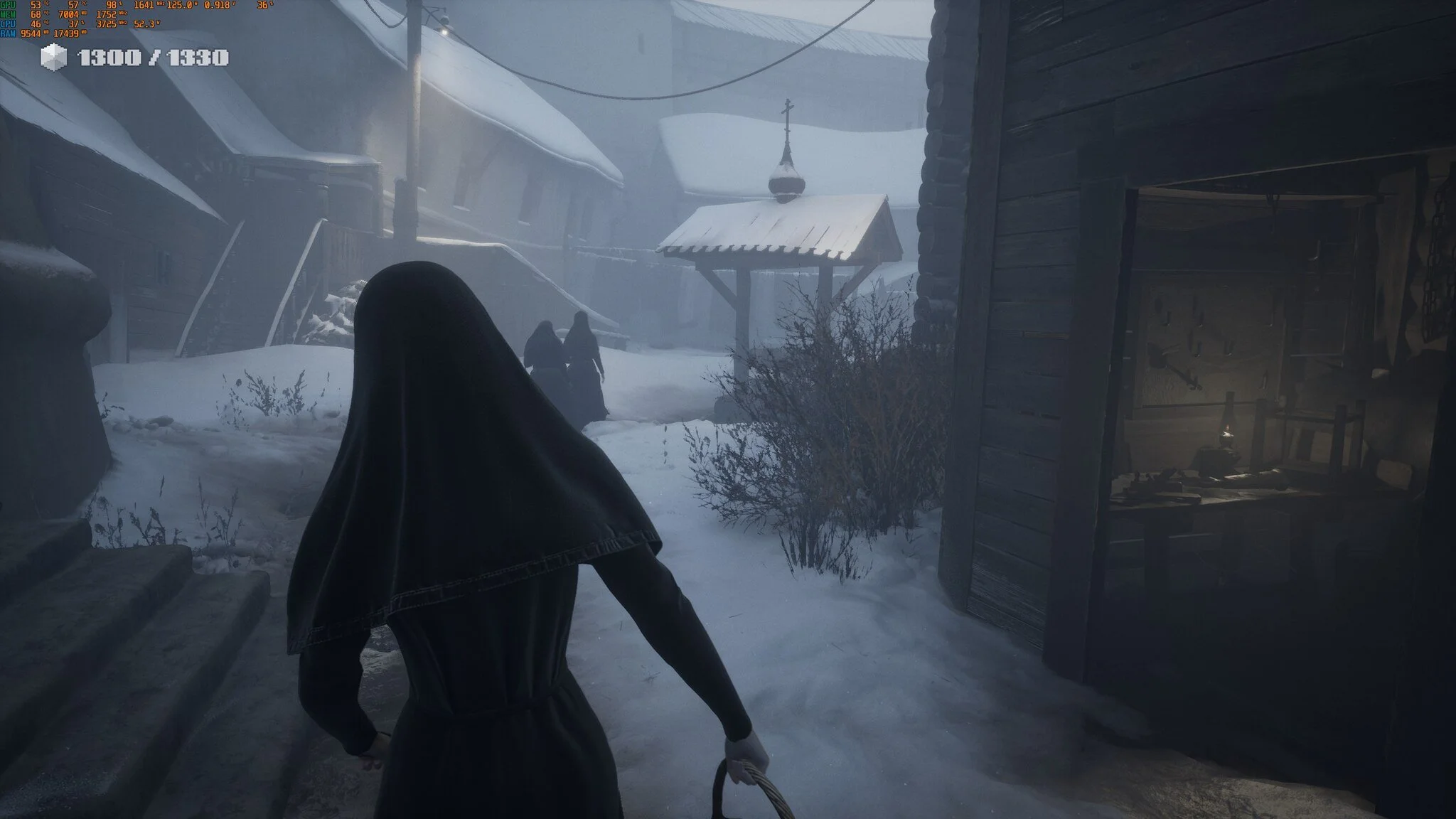
Camera owes a lot to RE4.
Set in a snowbound corner of Russia, somewhere around the First World War judging by the weaponry, you play as Indika, a nun who refreshingly does not look like a supermodel. She is sent from her monastery on an errand, something goes wrong, and for the rest of the game she is joined by a man who is her opposite in every way: spiritually, vocationally and by class. Along the way you learn why you were given your task, and then the game deviates from that path towards an end you’ll have to discover yourself. I’ll leave the spoilers for the podcast.
The gameplay itself is a mixed bag. Some of the platforming is awkward, and there are times when it’s clearly there just so the developers can say there’s gameplay. But there are highlights. A time mechanic, much like Braid’s, lets you shift parts of the world forward and back while you remain free to move, and one puzzle shuffling enormous construction platforms around is genuinely satisfying. Scattered through each level are benches where Indika can sit and contemplate, shifting the camera to a new perspective before returning you to the walk. It’s a lovely tip of the hat to the save couches in ICO, and there are plenty of other nods to gaming history here. These people know their games.
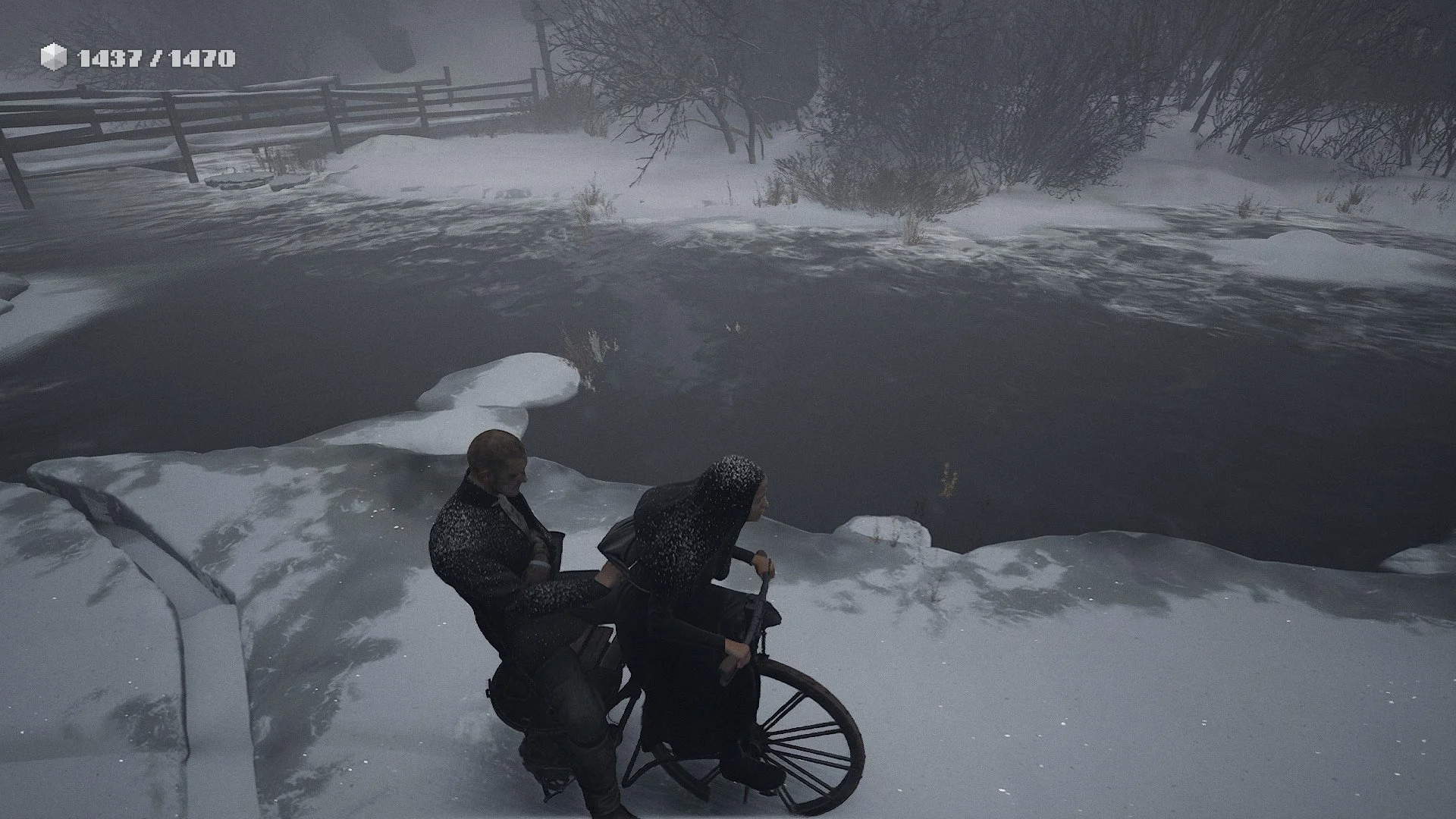
Absolutely rooted in historical accuracy.
Even the points system works, which I never thought I’d say. Find religious icons or perform certain acts and you earn points to level up, and the way this ties into the story is both funny and thematically clever.
The 2D sections are less successful. The opening, which drops you into a reverse vertical shooter with no explanation, is baffling, and a vehicle-steering sequence was downright horrible. The exception is a rooftop platforming level involving some cats, which is challenging and fun. I understand the game is built on contrast and juxtaposition, but most of these segments felt like contrast for its own sake.
Then there’s the saving. Indika only saves at the end of each chapter, and it doesn’t tell you. I found this out when dinner was ready, my family was screaming, and I came back the next night to replay the whole section. A cynic would say it pads out a short game. A kinder reading is that the developers want you to live it chapter by chapter, the way you’d try to finish a chapter of a book before putting it down. The checkpoints do make narrative sense, but a warning would have been nice.
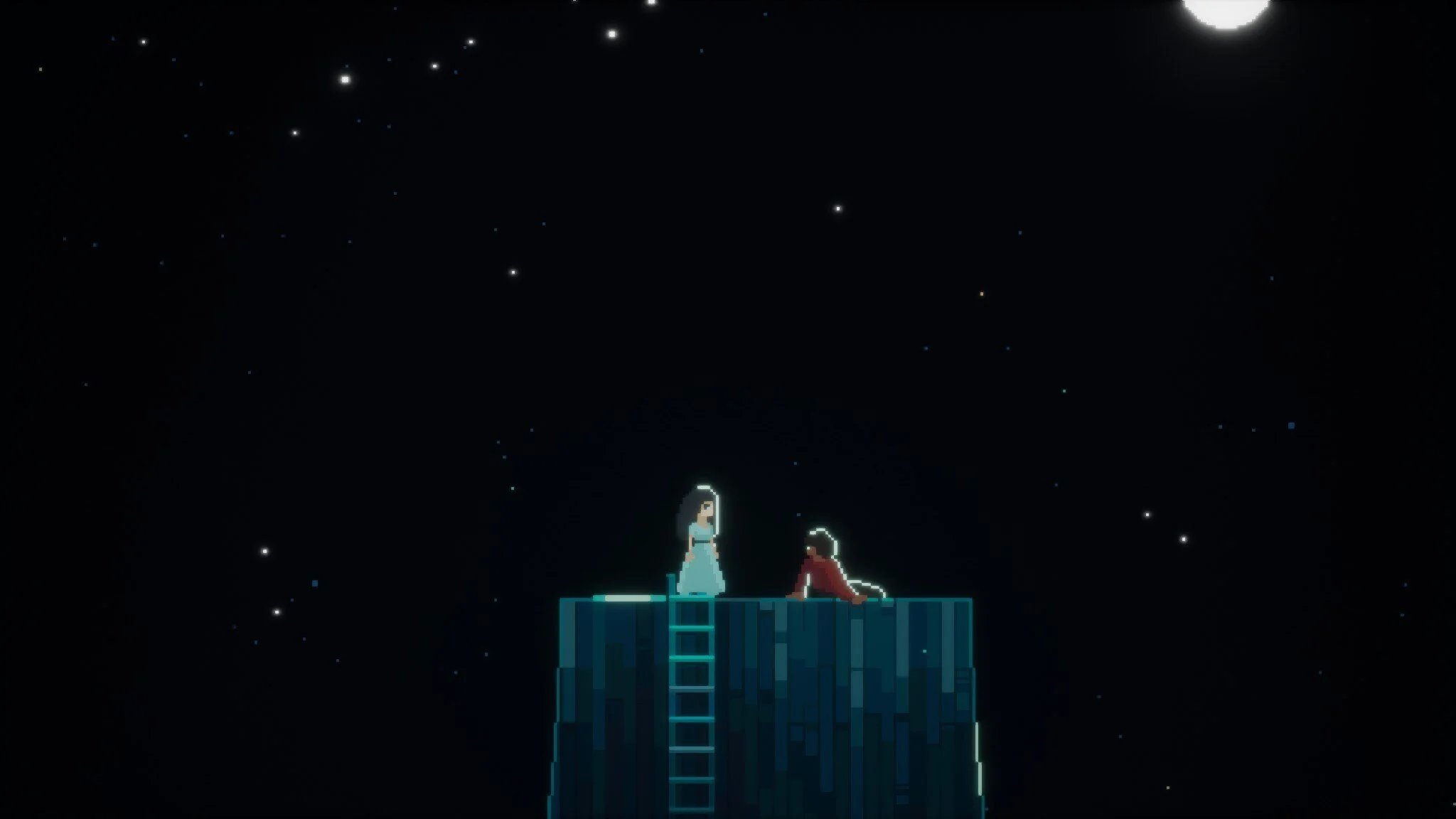
Turns out the Princess was in another castle.
None of these flaws undo what Indika achieves. Most games hand you a controller, give you a visceral thrill every few seconds, and then roll a soft cutscene at the end to make you feel you experienced something meaningful. Indika actually has a theme, and it weaves that theme through the gameplay, the dialogue, the writing and the characters at a level few games reach. I’d put it alongside Spec Ops: The Line as one of the rare games that has something to say and the craft to say it. Even if you don’t like it, play it. It stretches your understanding of what a video game can be, which is exactly what we’re here for.
Phil Fogg