The Case of the Golden Idol
“Death, with a fill-in-the-blanks answer sheet.”
PC. Developer: Color Gray Games. Publisher: Playstack.
Played on PC for review (and briefly, regrettably, on Steam Deck).
A man lies dead at the foot of a cliff. A second man stands over him, holding a golden idol, and a wonderful bloodstain is spreading across the grass. That’s all you get: one frozen moment, a handful of clues, and a page of sentences with blanks in them. The Case of the Golden Idol doesn’t tell you what happened. It asks you, and then it waits, politely and without judgement, while you get it wrong.
The way it works is simple to describe and very hard to put down. Each chapter is a single scene, frozen at the moment of a death. You click on people, pockets, letters and furniture, and every useful word you find, whether it’s a name, a weapon or a motive, goes into a pool at the bottom of the screen. Then you drag those words into the blanks of a written account of the crime: who killed whom, how, and why. When you’ve got enough of it right, the game tells you, and it tells you nothing more. There’s no hint button, no glowing outline and no fairy (I’m still bitter about the fairy). The game treats you as a detective, and it expects you to act like one.
The words come from the scene. The answer comes from you. The headache comes free.
I have to admit something about my method. By chapter four I was photographing the screen with my phone at the end of each case, so I could keep track of who was who across the game’s growing cast of nobles, servants, cultists and in-laws. That might sound like a complaint. It isn’t. The best detective games have always sent players looking for a notepad, and Golden Idol is the first one in years that had me reaching for mine.
My wife played it with me, which turned out to be a revelation of its own. We didn’t find the same puzzles hard. I’d race through a chapter she was stuck on, and then she’d solve something in minutes that I’d been looking at for half an hour. It works very well as a game for two people to argue over, and I mean that as high praise.
Then there’s the ending. Without giving anything away (I’ll leave the spoilers for the podcast), the last two chapters and the epilogue twist the story so that you go back over earlier cases in a new light. It’s a creative structural trick that games rarely attempt, and almost never pull off. Here it works completely. Twelve or so self-contained murders turn out to be one story, and you were writing it the whole time.
Old cases, new eyes. Bring your phone.
Of course, I can’t talk about Golden Idol without talking about Return of the Obra Dinn, and this is where I’ll lose some of you. Lucas Pope’s game is widely held up as the high point of the genre. I found it disappointing. Its one-bit art style is striking, but it adds nothing to the actual detective work, and in places it gets in the way. Golden Idol’s scrappy, almost ugly pixel art does the opposite. Everything you need is right there on screen, readable and fair. The style serves the game, rather than the other way around.
Sadly, “readable” stops at the edge of a monitor. I tried playing the sequel, Rise of the Golden Idol, on the Steam Deck, and the text was so small I refunded it. The two DLC chapters I’d bought on PC didn’t carry over to the Deck either, which is an odd thing to happen in 2025. Neither problem is a fault of the game itself, so neither changes the score, but if you’re a handheld player, consider yourself warned.
All said, there’s really nothing to fault in The Case of the Golden Idol. It’s clever, fair, and confident enough to leave you alone with your own deductions, and then it rewards you for sticking with it by changing everything at the end. I recommend it without reservation, and I recommend playing it with someone you love arguing with.
- Phil Fogg
10/10
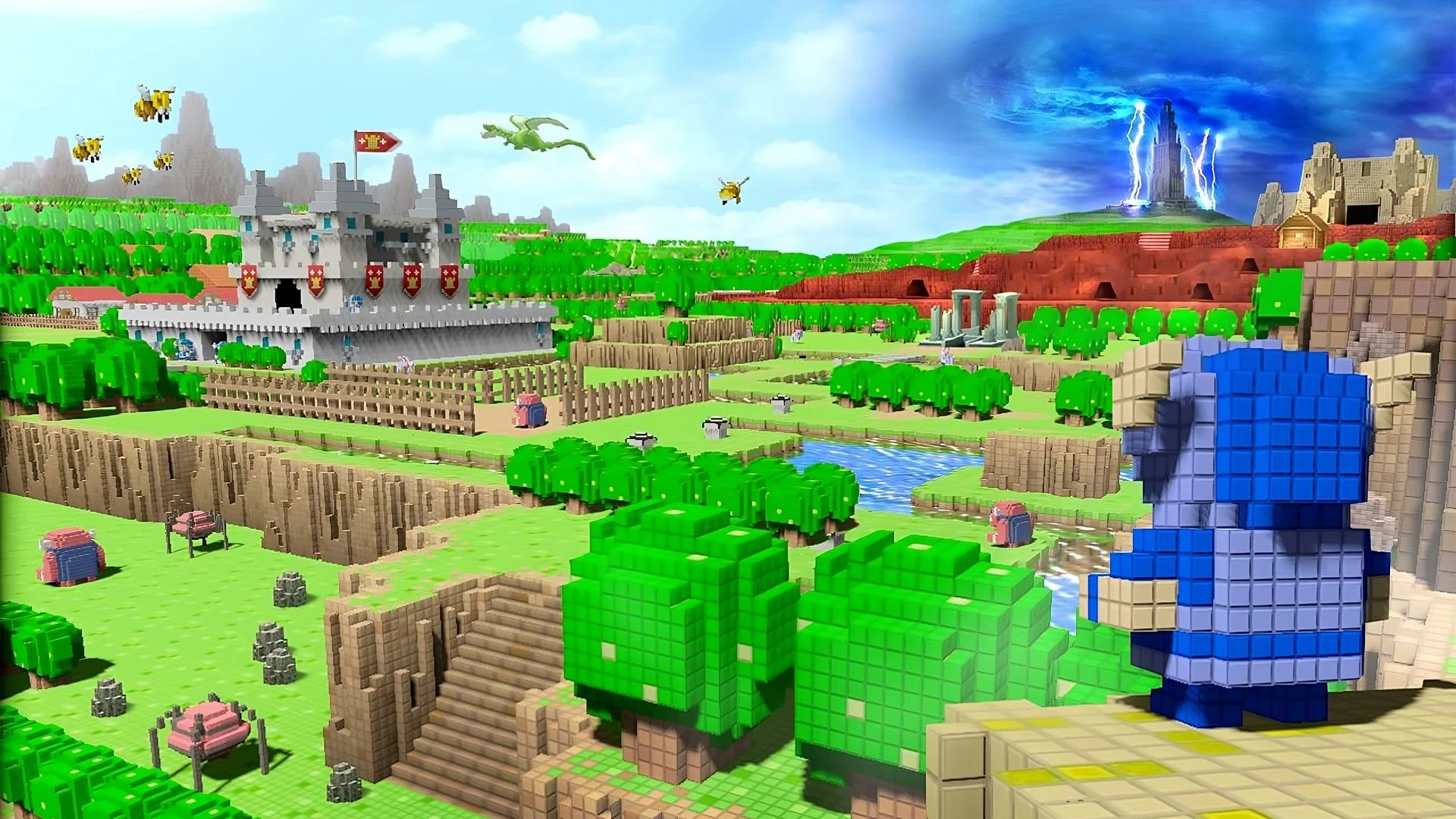
If a game could ever force you to look up the word “voxel” this is it.
Something has to be said here. I’ve never liked this kind of game. Top-down action adventures have always been something I respected from a distance, like jazz or cardio. Yet about seven hours later, halfway through and stuck at the Desert Temple, I’m enjoying it. I’m not sure what that says about me, but I’ll leave the self-examination for the podcast.
Part of the reason is the difficulty. 3D Dot Game Heroes doesn’t hold your hand. The puzzles are simple, often a block to push or a switch to find, but the game trusts you to work them out without a fairy shouting at you every thirty seconds. Modern Zelda has forgotten that kind of respect for the player, and it was nice to get it back. Enemies hit hard, and dying sends you back far enough to make you careful.
Then there’s the sword. At full health your blade grows enormous, often wider than the screen, and sweeps through enemies and bushes alike. Take a single hit and it shrinks back to something sensible. It’s a clever mechanic that turns your health bar into your weapon, and it makes every careless hit hurt twice. I spent more time than I’d like to admit playing like an accountant so I wouldn’t lose it.
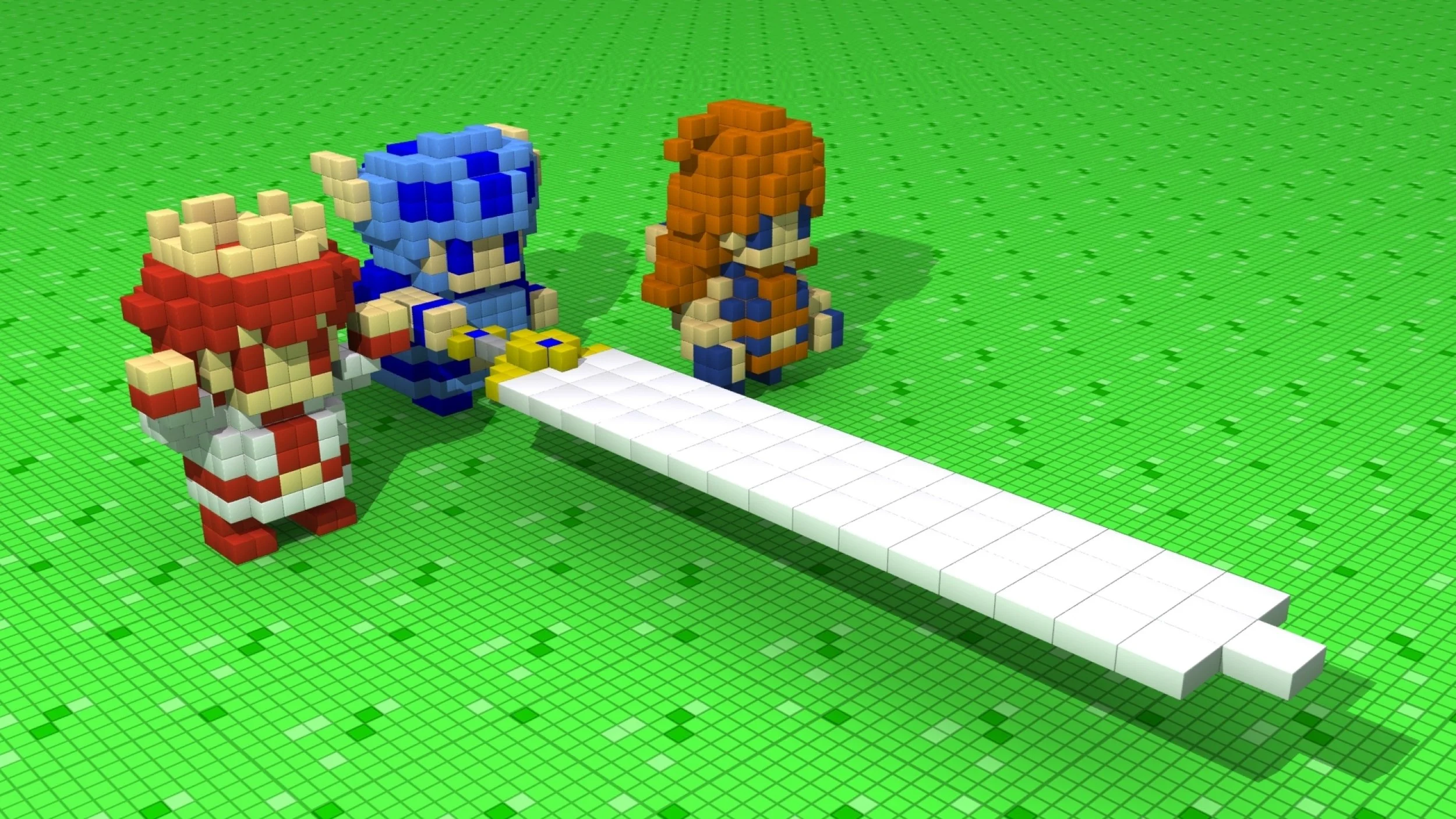
I’ve never seen one as big as that before.
The game looks great, if a bit cluttered. The blocky world is lit softly and blurred with depth of field, so the whole thing looks like a tabletop diorama photographed through a macro lens. Some will say it looks like Minecraft, though Dot Game Heroes was in development while Minecraft was still in beta. The camera sits somewhere between 2D and 3D. That makes for a strange perspective now and then, but it rarely gets in the way. There’s also a character editor for building your own blocky hero pixel by pixel. I used it once, made something regrettable, and put it away.
Sadly, the humour doesn’t land as well as the game it’s dressed up in. The jokes nod at JRPGs and are clearly made with affection, but they’re more knowing winks than actual laughs. At one point you visit a studio called Prom Software, an obvious dig at the publisher, and the joke goes nowhere. The jab at Demon’s Souls in the shop is funnier. Anyone who has suffered through that game will smile, and anyone who hasn’t won’t notice.
Those are small complaints. 3D Dot Game Heroes is hugely underrated, especially as a From Software title. It’s best known for its gimmicky look, but underneath is a well-made, demanding adventure that treats the player like an adult. If you grew up with the original Zelda, it will feel like going home. If, like me, you never did, it might be the game that finally gets you there.
- Phil Fogg